
16
Sep
Why Are My Kid’s New Teeth Coming In Crooked with a Big Gap?
Why Are My Kid’s New Teeth Coming In Crooked with a Big Gap?

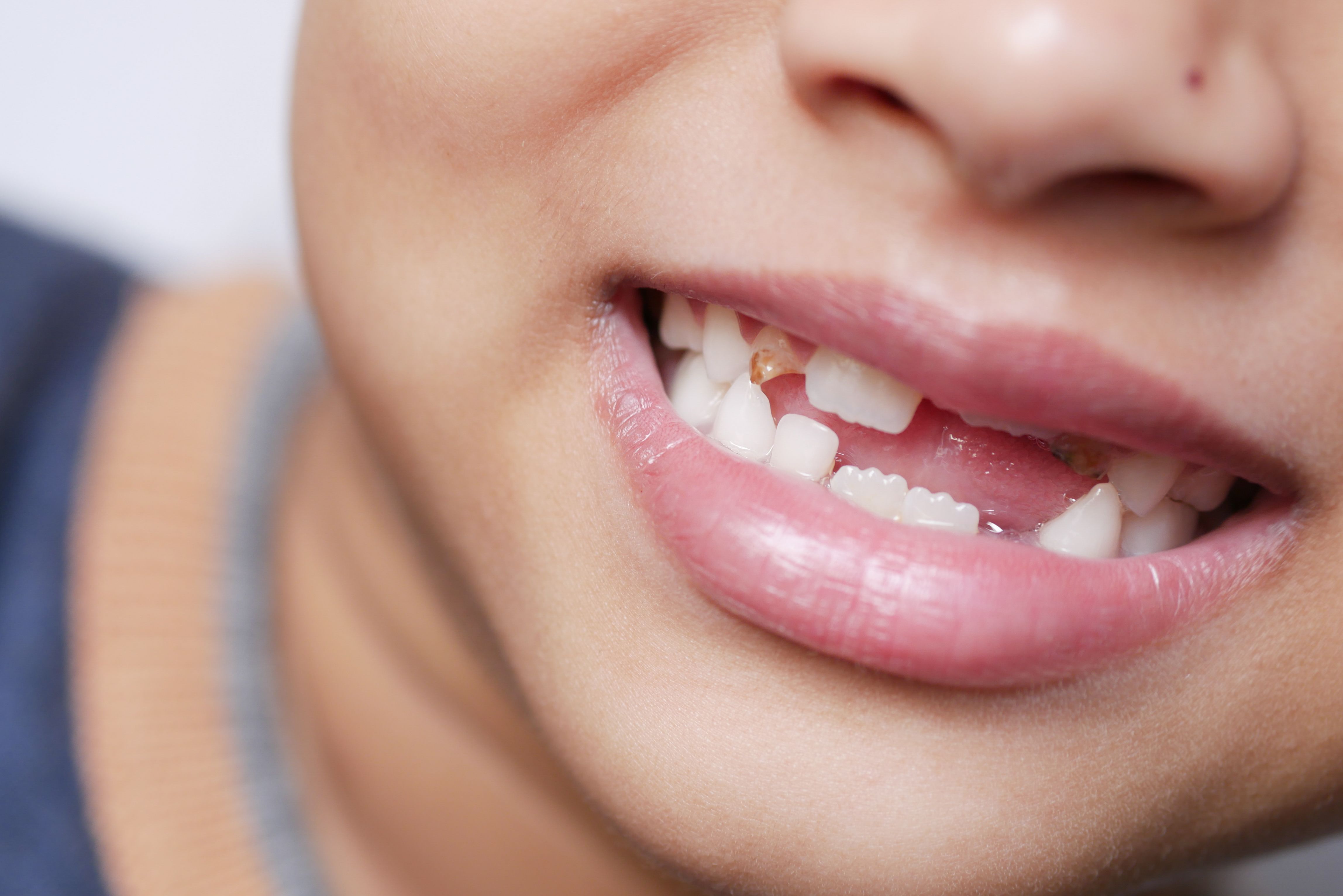
When your child’s permanent adult teeth start emerging, seeing wide spacing or twisted angles can be alarming. However, rotation and a noticeable front gap are remarkably common. In the world of pediatric dentistry, this phase is often called the “ugly duckling” stage of dental development.
As Howard County kids dental experts at Smiles4children, we frequently reassure parents that what looks concerning today is often just part of nature’s process as your child’s smile takes shape.
Why New Permanent Teeth May Look Rotated
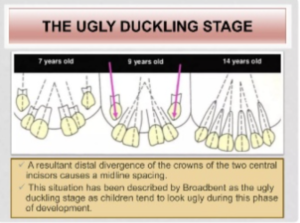
It can be surprising to see permanent incisors erupting at an angle or turned sideways. Several natural factors contribute to this:
-
Size Difference: Permanent adult teeth are significantly larger than the primary (baby) teeth they replace, meaning they must navigate a tighter space as they emerge.
-
Limited Space: Early on, the jaw is still growing and developing room to accommodate these larger teeth.
-
Guidance from Neighboring Roots: Developing adult teeth are influenced by the alignment of neighboring teeth and the remaining roots of baby teeth.
-
Natural Realignment: As more permanent adult teeth erupt and the jaw expands, rotated front teeth frequently shift into a straighter alignment on their own.
Why There Is a Big Gap (Midline Diastema)
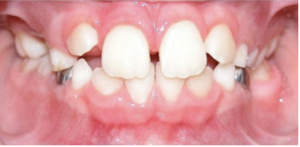
A noticeable space between the two upper front permanent teeth—known clinically as a midline diastema—is extremely common in children around ages 7 to 10.
As neighboring adult teeth (the lateral incisors and adult canines) continue developing, they push down through the jaw. This natural pressure pushes the roots of the front teeth together, encouraging the crowns to tilt inward toward each other. As a result, the gap often decreases substantially or closes completely without intervention.
When Should You Have It Evaluated?
While rotation and gaps are often completely normal, there are specific instances where early evaluation by a pediatric dentist is recommended. You should schedule a checkup if:
-
A tooth is severely rotated, angled, or erupting behind or in front of an existing tooth.
-
The gap between the front teeth is unusually wide or continues to widen over time.
-
A permanent tooth hasn’t erupted long after the corresponding tooth on the opposite side has emerged.
-
There is a prominent labial frenum (the tissue connecting the lip to the gum line), an extra tooth (supernumerary tooth), or a concern about missing teeth.
-
Your child is around ages 10–12+ and the gap remains significant as the adult canines begin erupting.
Let Us Help Guide Your Child’s Smile
Every child’s dental development moves at its own pace. If you share your child’s age and let us know which teeth are rotated or spaced (for example, the top two central front teeth), our team at Smiles4children can evaluate whether your child is experiencing a typical growth stage or if an early evaluation is recommended.
At Smiles4Children, we believe in partnering with parents to navigate every stage of a child’s dental growth. Be sure to follow along on Facebook and Instagram!